Why Mill-Sized Balers Are a Smart Investment for High Volume Waste
8th Jul 2025
Businesses producing high volumes of waste face intense scrutiny from investors, regulators, employees and the public to manage their commercial waste in a cost-effective yet responsible way. Relying on bins or skips provided by an external waste management company leaves you exposed to price hikes. Investing in a mill-sized baler for your premises can provide an exceptional payback, often achieving full cost recovery within a few years if it aligns with your specific operational needs.
This guide explains how UK businesses generating tonnes of recyclable waste per month can benefit from investing in a mill-sized baler for their premises.
What is a Mill-Sized Baler?
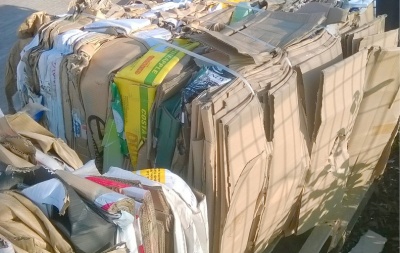
A mill-sized baler is a type of vertical waste baler used to compact large quantities of recyclable materials into bundles know as bales. Bales made by a mill-sized baler meet specific industry standards in terms of size and weight. Because of their uniformity, bales produced by a mill-sized baler can be sold directly to recycling mills when produced in large quantities.
What Are Mill-Sized Balers Used For?
Mill-sized balers are used as a cost-effective alternative to commercial bins and roll-on roll-off (RoRo) skips by businesses producing many tonnes of recyclable waste per month. Mill-sized balers densify and secure loose recyclable materials such as corrugated cardboard into a sellable format known as a mill-sized bale.
Challenges Faced by Businesses With High Volumes of Waste
Risk of high waste costs: It's more efficient for waste collection companies to collect high volumes of waste baled than loose. If you're not compacting waste at your site, you're leaving your business more vulnerable to bin and skip price hikes in the future.
Operational issues: Waste handling equipment at your premises needs to match your waste output. Due to the high amount of waste produced, employees need clear processes and proper waste management training to ensure it's handled in the most efficient way to prevent bottlenecks.
Increased Stakeholder Scrutiny: Recycling has become a top priority for businesses in England since the implementation of new workplace recycling legislation, known as "Simpler Recycling" in March 2025. Businesses generating high waste volumes are expected to lead the way in sustainable waste management practices.
Sustainability targets: Waste management is a core assessment category within the BREEAM standards which large waste producers may need to satisfy ESG (Environmental, Social and Governance) goals mandated by their local authority, landlord or lender.
What Industries Commonly Use Balers?
Balers are the backbone of various industries that produce high volume commercial waste.
Warehousing and Storage: Mill-sized balers streamline the on-site storage and disposal of OCC/cardboard compared to using wheeled bins or open skips.
Retail: Large retail stores use mill-sized balers to handle the vast amounts of excess packaging created from re-stocking shelves. Baling waste onsite prevents them from needing to backhaul it to a central depot.
Manufacturing: Manufactures assembling components sourced from multiple suppliers inevitably fill lots of bins and skips with packaging wasre. By switching to baling, they can reduce the frequency that bins and skips are emptied.
Mill-Sized Balers vs. Commercial Bins: A Quick Overview
This table illustrates the difference between using bins or a baler to dispose of high amounts of waste.
Mill-Sized Balers
Commercial Bins
Revenue Generation Opportunities
Large organisations producing lots of waste can quickly accumulate enough mill-sized bales of cardboard to sell them to a recycling mill.
No revenue generation opportunity from using commercial bins.
Speed
Mill-Sized Balers have a large door opening so big corrugated cardboard boxes can be placed directly into the machine to speed up the waste disposal process.
Staff may need to manually flatten waste before depositing it in bins which can slow down operations.
Efficiency
Mill-sized bales of waste can be securely stored in a comparatively smaller area leading to less disruption if your waste management firm gets delayed.
Delayed or missed bin collections can quickly become a significant operational problem for sites with lots of waste.
Conclusion: There are more benefits to sites producing lots of waste from using a baler than standard bins
Mill-Sized Baler Payback Calculation
The payback period on a mill-sized baler refers to the time it takes for the machine to pay for itself by delivering operational benefits to your organisation and from the revenue achieved from selling your baled waste. When calculating the payback, the core factors to consider are:
Initial Cost: The total purchase price plus setup, delivery and installation fees.
Bale Revenue: The net revenue you achieve by selling your baled waste to paper mills.
Useful Life: The operational period of the baler before it breaks down or requires replacement.
Waste Collection Fees: Balers of this size can reduce waste transport fees for large premises.
You can shorten the payback period by:
Using it during multiple work shifts: Sites operating 24/7 are likely to achieve a faster payback due on their baler investment by ensuring it that staff on all work shifts (early, day and night) are trained to use it.
Use it for baling multiple waste streams: Machine idle periods can be reduced when the baler is used for compacting multiple waste streams such as cardboard and polythene.
Purchasing a refurbished model: Buying a used baler reduces the amount of depreciation.
Providing comprehensive user training: You won't achieve the full benefit of installing this type of equipment unless it's used in the correct way by your staff.
Why a Mill-Sized Baler Investment Pays Off
Installing a mill-sized baler shifts your reliance from bins and skips owned by an external waste company to an in-house asset management strategy. The return on investment (ROI) is achieved through a few key cash-preserving mechanics.
Drastic Labour Reduction: A single operator can crush vast amounts of waste material in seconds which would otherwise take a team of workers much longer to perform manually.
Liability Protection: Providing equipment to employees to mechanically compact your waste can reduce the risk of workplace injuries stemming from the manual compaction of waste. Baling also reduces the frequency of waste collections which minimises the safety and security risks associated with external contractors visiting your site.
Asset Equity & Resale Value: Premium, well-maintained balers retain high residual value which can be used as leverage if you want to part-exchange it in the future.
Faster Compaction: For large amounts of waste, a mill-sized baler can be more efficient than a smaller waste baler because you can add feed it with more waste between each compaction cycle.
Revenue Generation: Good quality baled waste can be sold though bale prices vary in line with supply and demand.
Hidden Costs and Risk Mitigation
To prevent your baling equipment from becoming a financial liability, you must remain mindful of these factors that can drastically reduce the ROI:
Under-Specification Strains: Though it may be tempting to switch to a 200kg from a 500kg baler to save money, having an undersized machine installed will mean that your employees and the equipment itself will need to work harder.
Poor Asset Management: Skipping maintenance, servicing and staff training may lead to avoidable repair bills due to mis-use. Scheduled PPM and refresher training sessions can reduce costs in the long-term. When maintenance costs start to spike disproportionately, use that data to trigger a planned replacement before downtime impacts on your waste management procedures.
Fluctuations in Bale Value: The money you get from selling your mill-sized bales will vary because the price per tonne on OCC fluctuates on a monthly basis like any other commodity. To make sure your calculations are accurate, be careful not to over-estimate the value of your bales.
QCR: Independent Mill-Sized Baler Specialists
At QCR, we offer a range of certified mill-size balers that produce bales of optimal size and weight to help you get rebates for high volumes of cardboard and plastics. Our balers can be bought or hired with fully refurbished ex-rental balers also available. Our expert team are SafeContractor™ accredited, proving our adherence to excellence in health and safety standards. Contact us today for a free, no-obligation quotation on your next baler.
Final Thoughts
A good quality baler from a reputable baler supplier like QCR can continue to work for 10-20 years so it's important to enlist the help of an expert when calculating the payback on your potential investment.
WRITTEN BY NEIL HOLLAND, QCR Recycling Equipment
Neil provides advice to all types of UK businesses to provide a cost-effective and sustainable alternative to bins for high volumes of cardboard and plastic waste. He's been the head of sales at QCR Recycling Equipment for over 20 years. Whatever your waste management goals, Neil has the expertise to provide you with the support you need.
We use cookies to enhance your experience, improve our site's quality, understand your interests, and deliver personalised content.
If you choose to allow only essential, we'll use them solely to ensure our site performs properly and functions as intended. You can adjust your preferences or learn more in our cookie policy.


 01242 620903