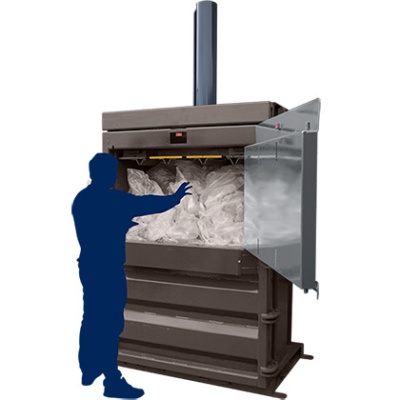
A baler is one of the most valuable pieces of recycling equipment a business can invest in. Whether you create waste inside a warehouse, hospitality outlet or retail store, installing a baler can reduce manual handling, monetise recycling and cut business overheads.
By compacting lots of waste material at once in a baler, businesses can improve productivity and free-up workspace previously cluttered with DMR bins. Whilst the largest distribution centres are likely to get the biggest gains, the versatility of balers means that shouldn't be overlooked by all sizes of business.
The best way to understand the benefits of a baler is with a free baler trial. That way you can experience the benefits and get a better understanding of why they're popular.
For a long time, balers were only used by the largest businesses in the UK. They were positioned at the rear of large warehouses and yards for compacting huge amounts of recyclable waste into bales.
Today, balers are growing in popularity. The reason is simple: waste management is governed by strict legislation and the way a business handles waste affects productivity, overheads, reputation and ultimately profit.
Baler Popularity Explained
Waste Baling Machines help businesses to efficiently segregate, store, compact and secure business waste into bundles known as bales. Across the UK, the most popular type of waste baler is one designed to bale cardboard and plastics.
The rise in baler popularity in the UK is due to several factors:
Rising Wage Costs: Wage costs are now one of the largest overheads for many businesses. The UK's National Minimum Wage rose to £12.71 for an employee aged 21+ on 1st April 2026. This has meant that managers can no longer justify paying staff to spend lots of time handling waste. A baler can reduce wasted time because employees now longer need to spend time compacting waste by hand. Over the course of a week, the labour costs saved by mechanising waste compaction can lead to substantial savings.
Workplace Recycling Laws: Simplier Recycling Legislation has made recycling mandatory for businesses with 10+ employees in certain parts of the UK. Balers suddenly become the preferred choice for businesses with bulky recyclable waste materials who needed a cost-effective way to segregate it from waste destined for landfill.
Consumer Pressure: Research shows that modern customers proiritise sustainability and actively align their spending with environmentally responsible brands. PwC's 2024 Voice of the Consumer survey demonstrated that consumers are willing to pay a 9.7% premium for sustainably produced or sourced goods. Installling a baler demonstrates your commitment to sustainabilty. This can enhance your brand image, attract environmentally conscious customers and set you apart from your competitors who may visibly suffer from overflowing bins as a result of not baling.
Rising cost of Landfill Tax: Recycling your waste delivers a saving of £130.75 per tonne (the standard rate of landfill tax in 2026) when compared to the cost of sending the same amount of waste to landfill. The process of recycling can be made more efficient by using a baler instead of a bin.
Sustainability Certification: Environmental standards such as ISO14001 and BREEAM (Building Research Establishment Environmental Assessment Methodology) have encouraged businesses to measure, evaluate and improve on the way that waste is managed. A baler can help a building achieve extra credits towards BREEAM certification because the process of baling recyclable materials provides a long-term sustainable waste solution for people working or living in a property.
Rise in Land Values: Balers reduce the amount of space needed for waste storage when compared to using DMR bins. Businesses without the necessary capital to expand into a new premises can switch to baling to provide much needed relief.
Reduction in Waste Collection Frequency: Balers help business to store a higher proportion of waste within the same space by densifying it. This may help a business to switch to fortnightly waste collections instead of weekly collections.
Manual Handling Concerns: Workplace injuries relating to the manual handling of business waste puts businesses at risk of reputational damage and prolonged staff absence. By relying on baler instead of the strength of your employees, the process is mechanised.
Waste streams that waste balers tackle
Many people might be surprised at just how many types of commercial waste can be dealt with by a convenient waste baler:
Aluminium and foil i.e. tins, cans
Paper and cardboard
Plastic packaging, trays and PET bottles
EPS, XPS, PSP, EPP, EPE
While some waste balers handle only one specialised type of trade waste, other waste balers can handle multiple waste streams.
Conclusion
UK businesses that once considered waste baling as a background process are now recognising that it can become an important competitive advantage. Having a baler at your premises can improve how a business uses its space, deploys its staff and meets important workplace legislation.
Our baler specialists are on hand to advise you on the specific baler model that will best suit the needs of your individual business.
We use cookies to enhance your experience, improve our site's quality, understand your interests, and deliver personalised content.
If you choose to allow only essential, we'll use them solely to ensure our site performs properly and functions as intended. You can adjust your preferences or learn more in our cookie policy.


 01242 620903