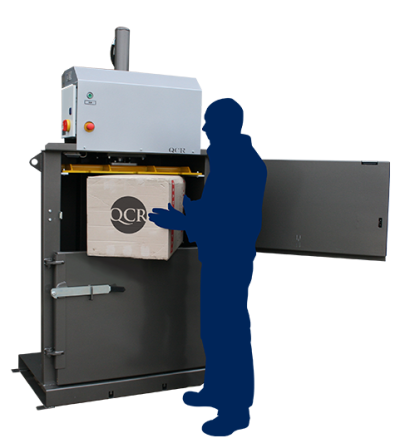
If you've been asking yourself "should I hire or buy a cardboard baler", you're not alone. It's one of the most common questions warehouse managers and business owners in the UK ask when they want to bale cardboard. The answer isn't one-size-fits-all. The right choice depends on what matters most to you: long-term value, financial flexibility or the latest technology.
In this guide, we'll talk you through the key factors that distinguish hiring from buying and examine the real costs involved to help you make the right decision.
What's the Difference Between Hiring and Buying a Cardboard Baler?
Before getting into the specifics, you need to understand the two main ways UK businesses acquire cardboard balers:
1. Buying Outright: This means a one-off capital purchase. You own the baler, add it to your balance sheet as an asset and are fully responsible for its maintenance, safety compliance and eventual disposal.
2. Hire: You commit to a rental period of typically one to five years. Maintenance is frequently included as part of the contract. You can return the machine at the end of the agreement if it's no longer required.
RENTAL vs PURCHASE: A Quick Comparison
Rental
Purchase
Upfront cost
Low
High
Monthly cost
Ongoing
One-off
Maintenance responsibility
Check your contract
You
Ownership/asset value
No
Yes
Best for
Growing businesses
Stable operations
Should I Hire or Buy a Cardboard Baler? Two Key Questions to Consider
Do you have the capital to buy outright?
A new medium hydraulic baler from reputable supplier typically costs between £5,000-£10,000 (depending on specification). For businesses needing multiple machines, that's a significant sum tied up in depreciating assets. That capital may be needed more urgently elsewhere which is why businesses choose equipment rental as an alternative.
Balers purchased outright may qualify for capital allowances under HMRC's rules which enables businesses to offset the cost of a machine against their taxable profits (providing they have not used their allowance). Ask your accountant about current Annual Investment Allowance (AIA) thresholds and rules for UK businesses to find out if it's possible.
Is your business growing?
To work well, your baler must reflect the amount of waste produced at your premises. If waste volume grows beyond the capacity of the machine it can impact on operational efficiency. At QCR, we've seen significant operational improvements for businesses that choose baler rental due to the in-built flexibility they have written into the contract to upgrade their machine at any point without admin costs.
The Real Costs: Hiring vs Buying a Cardboard Baler in 2026
Understanding the true cost of each option will help you calculate the total costs of each procurement method.
Cost of buying a baler
The purchase price of a baler is only the starting point of baler ownership. Periodic baler servicing by a competent professional is vital. A baler service contract typically costs between £350-£500 (ex VAT) per vertical baler, per year depending on the specification of the machine.
Cost of hiring a baler
The average cost of hiring a medium sized cardboard baler in the UK is approximately £45 per week excluding VAT. However, the headline cost offered by the supplier should be examined carefully because not all hire companies provide an equally rated hire service. Delivery, set-up, servicing ,training, spare parts and consumables are all factors that you need to consider when doing a service comparison.
Which is cheaper?
Over the lifespan of a baler, purchasing a machine is often the cheaper procurement method. However, you miss out on all the included benefits of hire such as free delivery and training. Before you go ahead with a purchase, you must be confident that you will not outgrow it quickly to prevent you from needing to repeat the purchase process again in the near future.
What About PUWER Compliance?
This is a topic most hire vs buy articles gloss over but it's a very important consideration. Whether you decide to hire or buy a baler, UK law necessitates full compliance with PUWER (Provision and Use of Work Equipment Regulations 1998). This means that your baler must meet current safety standards, be fit for purpose, maintained correctly and that all users are adequately trained. Hiring a baler does not transfer your compliance responsibilities to the rental company. You remain a duty holder on site so it's essential that you only choose a reputable company to hire from.
When you hire a baler from QCR, our baler servicing packages are designed to keep you fully compliant with scheduled thorough examinations, SafeContractor™ certified technician support, and comprehensive service records so you don't need to worry. Find out more on our dedicated Rentals page.
When Buying a Baler Makes the Most Sense
Purchasing outright is likely the right choice if:
You have available capital and want to avoid ongoing monthly invoices
You want the machine as a balance sheet asset with resale value
You have an internal support team to organise servicing and check compliance
Your waste volumes are not predicted to change significantly
When Hiring a Baler Makes the Most Sense
Hire will be a smarter choice if:
You need a baler for a short-term project
You want to preserve capital for other areas of the business
Your waste volumes are likely to change in the future
You want access to the latest technology without worrying about depreciation
You prefer predictable monthly costs
FAQ: Should I Hire or Buy a Cardboard Baler?
Is it cheaper to hire or buy a baler in the long run?
Over the lifespan of a well-maintained machine, buying outright is typically the lower total cost choice. However, hire wins on cash flow, flexibility and avoiding the hassle of unexpected repair costs.
Can I try a baler before committing to hiring it?
Yes. Any reputable supplier with confidence in their equipment will offer you a free trial before you commit. Trials are the best way to test a specific model in your working environment before deciding. QCR's recycling baler range includes pneumatic and hydraulic machines giving you a larger choice of options.
How should I compare baler quotations?
Compare baler quotations by first verifying the suitability of the machine with a trial at your premises. Check whether the quote includes delivery, installation, training, servicing and spare parts.
What is the best type of baler to buy in 2026?
Most UK warehouses are moving away from twin-chamber balers in 2026. Instead, sites are opting for two smaller balers instead to reduce the risk of a broken machine causing a backlog of waste. The negativity towards twin-chambered balers is due to their design which features a single, cumbersome top-mounted compaction unit that the operator must slide between each compartment of the machine. This design causes the following risks to a business:
Injury risk: If waste protrudes from the compartment, an inexperienced operator may try to slide the compaction unit over it but this is dangerous because the whole unit may bounce back towards them.
Mechanical risk: If the compaction unit develops a fault, both compartments are out of action until it's fixed.
Making the FINAL decision
The question of whether to hire or buy a baler ultimately comes down to two factors: what you can afford now and how much waste you'll be baling in the future. Uncertainty is common in 2026 which in our opinion gives rental the edge because it offers a far greater degree of flexibility.
Still not sure which route is right for you? Contact QCR and we'll help you work through the numbers.
By Neil Holland, QCR Recycling Equipment
About the author: As Sales Director at QCR, Neil has over two decades experience of helping businesses to choose the right cardboard baler for their needs. QCR is accredited by SafeContractor™ and established in 1999.
We use cookies to enhance your experience, improve our site's quality, understand your interests, and deliver personalised content.
If you choose to allow only essential, we'll use them solely to ensure our site performs properly and functions as intended. You can adjust your preferences or learn more in our cookie policy.


 01242 620903