Waste Balers do not have a single standard "book price" like cars. Instead, market and resale values vary depending on the machine's specification, age and condition. The marketplace includes everything from a rusting eyesore costing £100 to a heavy-duty industrial horizontal machine that costs tens of thousands of pounds.
The short answer: The price you'll pay depends on the baler type, capacity, power source, condition, service history and the warranty supplied. High-quality vertical waste balers typically cost four figures, while 3 phase machines cost even more because of the difference in specification. But actually, the purchase price is only part of the cost of the machine. You should also take into consideration the energy costs, servicing costs, delivery, set-up and consumables which all effect how much you'll fork out.
So, how much should you budget for? Read on to learn more or call QCR on 01242 620903.
What are the typical waste baler price ranges?
As a general guide:
Pneumatic waste balers: This is the cheapest and simplest way to bale small amounts of cardboard and/or polythene if you have an air compressor at your premises.
Cardboard balers: The most common type of machine on the UK market, although quality varies enormously.
Hydraulic vertical waste balers: Low thousands, depending on specification, age and condition.
Mill size waste balers: Typically more expensive than a standard vertical baler because you're paying for a much larger machine.
Horizontal balers: Typically, the most expensive category. Pricing will vary depending on specification and manufacturer.
These figures should be treated as a general guide, rather than a quotation or fact. Two near-identical waste balers can still differ in price if the aftercare packages supplied with them are different.
1. Baler size has a major effect on price.
The first question to ask is not "what's the cheapest baler?" but "what baler suits my needs?" Going for the cheapest baler may turn out to be a poor investment of company resources if the capacity doesn't match the quantity of waste it'll be needed to bale each week. An undersized waste baler will struggle to keep up with your volumes and as result, cause an undesirable build-up of waste at your premises.
It's best to choose a baler based on how much waste you produce on average per week. Upgrading from a standard vertical baler capable of producing 350kg bales to a mill size machine producing 500kg+ bales will unsurprisingly increase the cost you'll pay because the size of the compaction plate, bale chamber and ram is larger. However, due to the increased compaction capacity, the decision to upsize often pays for itself in the long term due to economies of scale and potential revenue from selling the baled waste.
Rather than looking at a price tag alone, carefully selecting the right machine size for your needs (either on your own or with help from a baler specialist) will speed up your return on investment (ROI). Bigger vertical waste balers cost more than smaller machines, but their comparably large waste loading apertures are essential for the efficient loading of bulky materials into the waste compaction chamber - particularly when wage costs in the UK are on the rise. Plus mill size bales can be sold in volume to help offset the cost of the machine.
2. Air-powered, 13amp or 3 phase: Which costs more?
The power source affects both the purchase price and the cost of running a baler. It's important to take both installation and running costs into account when comparing different models, as one power source may work out cheaper in the long run.
For example: Pneumatic Waste Balers typically have lower upfront costs than a electrical equivalent and also won't need to be PAT tested each year. QCR's pneumatic baler range includes models such as 205, 305 & 509.
3-phase Waste Balers remain the front runner for compacting high volumes of recyclable waste day-in, day-out. The electrical cost of running them can be reduced if you have solar panels at your premises. QCR's Mill Size Waste Baler range are the preferred choice for baling waste in large warehouses.
3. Why delivery, set-up and training provision can dramatically change the cost of a waste baler
When comparing quotations, it's important to ask what is and isn't included in the package. Afterall, after delivery has been made, there's still lots to do in terms of getting your baler up and running. Whilst kerbside delivery is often the cheapest method, it's not necessarily the best delivery option for most workplaces that don't have the necessary expertise within their team. A lower-priced baler with no installation service included can become an expensive if you need to hunt around for a specialist to move it in place, get it operational and train your staff to use it. This is why baler delivery and set-up should be treated as a key essential, not an afterthought.
Estimated delivery leadtime is also an important factor when comparing quotes. If you're replacing a broken machine that can't be fixed, a supplier that keeps balers in stock should be your first point of call. Equally, the location of the supplier should not be overlooked, if you're based in England, but your supplier is in Ireland, the cost and time of the required ferry crossing can be troublesome.
4. Proven machinery credentials adds to the cost
When looking at quotes, two waste balers may produce the same size of bale but have noticeably different price points. The reasons behind those cost differences are important and shouldn't be overlooked.
Service history is one factor to look out for. A baler specialist that both services and refurbishes their own machinery can prove the machine you've shortlisted has been thoroughly inspected, tested and checked before being placed on the market. Whereas a machine of unspecified origin of a lower price may not have the paperwork to prove it's been looked after.
Certification and warranties are another factor to consider. A machine supplied with a detailed instruction manual complete with declaration of conformity and a warranty provides additional peace of mind to the purchaser. Having the instruction manual means you can verify its specification compared to the sellers claims. Whereas a machine supplied with little or no expertise is more risky.
4. New or used: Which waste baler offers better value?
A used waste baler can appear to be an attractive proposition on paper because the price tag is lower. However, as the saying goes buyer beware, because the initial quoted price does not always tell you everything you need to know. A used baler may have a broken ram, a bent compaction plate or be fitted with inferior components which may not be apparent straight away. A new or refurbished waste baler from a reputable supplier can give you an accurate machine specification, a documented servicing history and a period of warranty cover if anything goes wrong.
The best value machine for your workplace is the one that will deliver the best level of service over it's lifetime.
QCR's Waste Balers are supplied with a warranty period, providing businesses with additional assurance that if a problem arises post-installation.
5. What does a baler really cost after you buy it?
Purchase price is only one part of the total cost of ownership. Once a baler is installed, you'll also need to account for:
User training (both on the day of installation and any future training needs)
Routine servicing by a competent professional
Bale tie material (either wires or banding depending on the specification of the machine)
Spare parts cost and availability
6. Should you hire or buy a waste baler?
The best way to cover the cost of a waste baler depends on how long you need it for and the size of your budget.
When you buy a machine you own it from day one, although it ties up cash in the business. Whereas hiring a baler can be more affordable if the specification of the machine you need exceeds the finance you have available.
Short-term rental can make sense for businesses experiencing growth, just starting-up or when your future needs are unclear.
How to get an accurate waste baler price
When getting a quote, a price from a baler specialist that has visited your premises to assess your needs beats a verbal estimate over the phone. Before deciding on which supplier to contact, investigate:
Credentials (such as third-party certification)
Customer reviews (most recent star rating)
Location (you'll pay more if delivery involves a ferry crossing)
Free trial availability (ideal for calculating feasibility)
Purchase, finance or hire options
Depth of range (do they offer both pneumatic & hydraulic options)
Expertise (are balers something they specialise in or just an add-on range)
Quotation expiry date
Checking these facts before you make contact makes it easier to compare like-for-like quotations. A good supplier with knowledge of waste baling will not hurry you into making a purchase.
Summary
The true cost of installing and operating a waste baler goes far beyond just the headline purchase price. Choosing between small, medium and mill size machines can significantly affect both upfront costs and your ROI. Then, you also need to take into account the benefits of selecting new, used or refurbished baling machines which can create further confusion.
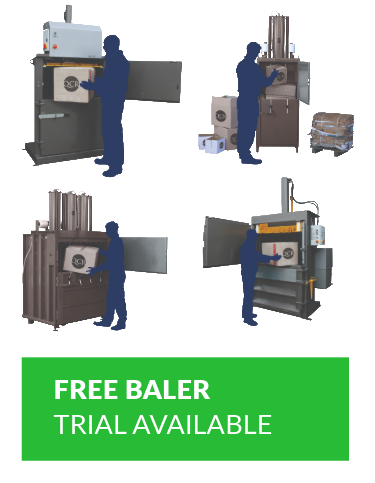
Our top tip for prospective purchasers is to sign-up for free baler trial with a reputable supplier to get an accurate insight of how much a waste baler will cost and the level of aftercare provided.
Contact QCR today to get our insight into the right baler for your budget from our 26 years of experience of selling and hiring balers to UK businesses.
We use cookies to enhance your experience, improve our site's quality, understand your interests, and deliver personalised content.
If you choose to allow only essential, we'll use them solely to ensure our site performs properly and functions as intended. You can adjust your preferences or learn more in our cookie policy.


 01242 620903