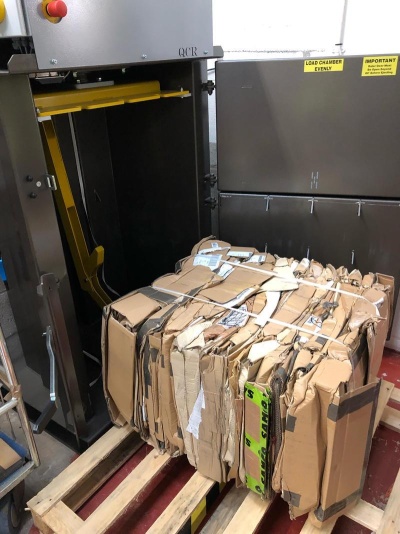
How Can You Maximise the Efficiency of Your Cardboard Baler?
27th Jan 2025
Cardboard balers are vital waste management aids used in warehouses and stockrooms to mechanise the process of waste compaction. Businesses often miss out on the full potential of cardboard balers because of three main reasons: skipped machine maintenance, lack of training and having the wrong model installed for their needs.
Our credentials: As cardboard baler specialists with over 25 years of experience in the supply and installation of balers, QCR understand more than most about how to get the most from your machine. Offering first-class support, including free technical advice, comprehensive service contracts and operator training packages, our professionals have a thorough understanding of how to get the best baling results at your place of work.
Why Efficiency Matters for Cardboard Balers
Maximising baler efficiency is important to reduce operating costs, enhance workplace safety and boost overall productivity. Key benefits include improved bale output, less downtime and reduced wear and tear.
Longer equipment life: Machines that have been regularly inspected and serviced perform better because potential problems are revealed earlier.
Improves ROI: A machine with less idle time means that you get a better return from your asset.
Faster waste throughput: Streamlined, well-documented baling procedures means that cardboard waste moves quicker from the place it's created to a recycling facility.
Maximises waste storage capacity: Baling multiplies cardboard waste storage capacity at your workplace without increasing the number of bins used.
Safety: Competent baler use reduces the risk of shortcuts leading to personal injury or badly formed bales.
Top Tips to Improve Cardboard Baler Efficiency
There are many things you need to think about to guarantee that your waste baler helps rather than hinders your recycling efforts. If you follow these points, you’re on the right track to getting the best ROI from your machine:
1. Service it Regularly
A properly serviced baler operates at peak performance. Baler servicing should be planned and carried out regularly by a trained competent professional. Servicing involves checking and testing different parts of your machine to ensure everything works and is how it should be. This helps to prolong the lifespan of the machine and protect the safety of anyone using it. Discovering any issues early on means they won’t go unnoticed and can be sorted quickly before they get worse.
2. Organise Baler Training for All Users
Machine downtime is to be avoided if efficiency is your goal. If a baler is used in the wrong way, it can not only pose a risk to the person operating it but can also cause damage the machine. Refresher training gives employees the chance to ask questions and go over anything they’re unsure about. Training sessions should cover all the key points in the manual and include best practice guidance. Include a step-by-step demonstration of how to operate the machine and where the bales are to be stored. Make sure employees have easy access to training materials and the full instruction manual after the refresher training has concluded.
3. Remove Contaminants from Your Waste
Don't spend time baling waste that isn't suitable for recycling. Quite simply, if your cardboard waste is contaminated, it shouldn’t be baled. This includes plastic and metal components, food, and decorative elements like glitter and fabric. Always remove or cut off any contaminated waste before putting it into the chamber of the machine. Don’t add wet cardboard waste either, because this can clog up your equipment and lead to your bales being rejected.
4. Right-Sizing of Your Baler
To get the highest efficiency gain from your baler, it must match the waste your generate. There are many models to choose from so you need to weigh up the cost of the machine and compare it to the savings generated by using it. For example, mill size balers can generate more revenue than smaller balers however, they are more expensive than their smaller equivalents.
5. Keep good stocks of bale tie
Running out of baler banding is a disaster if efficiency is your aim, always keep a good amount in stock to prevent any interruptions to your operations. Be mindful to reorder more frequently in the lead up to your peak trading times when you may have more waste than usual. In the case of large balers, running out of baler wires can cause waste to quickly accumulate and create a health and safety risk. Holding more wire stock in the lead up to Christmas is our top tip for all high-volume waste producers because sometimes there may be delays to palletised deliveries.
Financial and Operational Impacts of Inefficient Baling
The inefficient use of a baler occurs when the equipment is used below its maximum potential output. The gap between potential cardboard baler output and actual performance represents significant missed opportunities for businesses in the UK.
Wasted capital: An under-deployed machine ties up cash that could be used elsewhere.
Operational bottlenecks: A machine with an inadequate specification for your needs will create a build-up of waste.
Wasted space: Machines installed in prime locations that aren't used regularly is a bad use of valuable floor space.
Rejected bales: Contaminated baled cardboard can’t be recycled and will likely be rejected by recycling companies.
Strategies to Maximise Baler Usage
Low machine utilisation wastes financial resources. A baler consultation with a specialist can quickly identify ways to improve usage before you switch back to bins.
Relocation: If your warehouse space gets re-organised, move underused equipment as close to the source of waste as possible to maximise efficiency.
Redeployment: If your waste volume is declining, find out if you can use the equipment for bale other types of waste such as polythene.
Replacement: Any reputable supplier will offer you a part-exchange deal if you want to swap your machine for something else.
Employee Education: Highlight the importance of cardboard recycling to staff and how the baler helps them to do this. Manual box compaction is slow. A worker compacting boxes by hand can crush approximately 30-40 boxes per hour, but this is limited by their own strength and motivation. In contrast, a competent baler operator can crush hundreds of boxes per hour mechanically. This multiplier is transformational, particularly for businesses with a small team.
Waste Management Solutions with QCR
QCR is a UK leading supplier of high-quality recycling machinery in the workplace with over 25 years of experience. Across our website, you’ll find a range of cardboard balers available for purchase or hire. Our expert team are SafeContractor™ accredited and are happy to undertake a free baler consultation at your premises. You can put your trust in QCR for efficient and reliable waste management solutions.
Written by Neil Holland. Updated on 29/07/26
Neil and the nationwide team at QCR help businesses to choose the right cardboard baler for their needs to maximise efficiency based on our 25+ years of waste baling industry knowledge.
We use cookies to enhance your experience, improve our site's quality, understand your interests, and deliver personalised content.
If you choose to allow only essential, we'll use them solely to ensure our site performs properly and functions as intended. You can adjust your preferences or learn more in our cookie policy.


 01242 620903