Things to Know When Buying or Renting a Cardboard Baler
12th Apr 2021
Buying or renting a cardboard baler is a big decison. Balers can make the management and recycling of carboard waste easier, but you'll need to choose to right machine and supplier to make the switch from using bins as smooth as possible.
If you are considering getting a cardboard baler for your business premises, here’s a quick guide to give you a head start.
What are cardboard balers and how do they work?
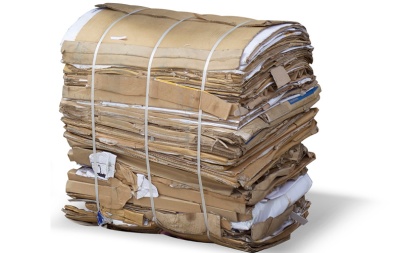
While designs and brands vary, most balers operate in a similar way. They all feature a combination of a crushing chamber and a pressing plate that work together to make a bale of cardboard. The consistently shaped bales produced by a baler are more efficient to store and transport compared to whole cardboard boxes put into standard recycling bins.
Do I really need a cardboard baler?
Balers are no flippant acquistion; they're hefty pieces of waste machinery that can sometimes come with an equally hefty price tag. Before you commit to a baling machine, you should consider where baling cardboard is the right recycling solution for your business. Businesses typically replace recycling bins with a baler to achieve three key goals: increase staff productivity, free-up workspace and reduce recycling costs.
When investigating whether baling would be feasible at your place of work, take the following steps into consideration:
1. Identify your cardboard recycling pain points: Pinpoint workplace inefficiencies and issues that you hope that baling will solve. We've found that businesses typically switch to baling as a method of recycling when the amount of cardboard waste produced at their premises has increased to such an extent that the use of recycling bins is no longer tenable in terms of time, costs and space.
2. Define clear objectives and set KPIs that you'd like to achieve by baling: Track how much money, space and time is currently spent each week recycling cardboard at your premises so you can measure the true impact of switching to baling instead. With wages and rents creeping up each year, the true cost of how much it costs to manually flatten a cardboard box by hand may surprise you!
3. Assess the opportunities created by baling: By mechanising the process of crushing cardboard boxes, you'll create additional capacity within your workplace to complete other tasks. Bear in mind that the benefits achieved by baling aren't always tangible so you'll need to conduct a full quantitative and qualitative assessment of the potential pros and cons across all internal departments.
4. Test the baling process: Any established baling machine supplier with confidence in their equipment will let you trial a baler for free before you commit. The main benefit of putting a machine to the test at your premises is that you can accurately measure how well it'll fit into your space, and whether it suits your operations and team.
What kind of baler do I need?
Though the working principle is the same for all balers, there are a wide range of different models available, so care must be taken at the procurement stage to ensure you get a good match. The following questions below will help you whittle down the huge number of options available to a shortlist:
Big Baler or Small Baler?
The first thing to research is the maximum size of baler you could accommodate at your premises. Obviously, the smaller your premises, the less floorspace you'll have available which may limit the size of machine you can safely install. Available space is limited to the machine itself, you also want to consider bale movement and bale storage.
Standard Baler or Mill Size Baler?
Different balers produce bales of different weights (typically ranging from 25kg to 500kg+), so you’ll need consider what the maximum bale weight you can safely manage and store at your premises. Most businesses with a forklift already at their site will opt for a machine that makes large or mill size bales because they can be ejected straight onto a pallet and moved easily to a storage location ahead of collection. Standard machines that produce small bales of cardboard are favoured by businesses that use a pallet truck or sack truck (also called a sack barrow). Finally, consider the overall dimensions of the bales produced. A larger bale size would be fine in a big warehouse, but be careful to consider the maximum width of your doorways if space is tight.
Inside Baler or Outside Baler?
If you're planning to locate your baler inside, check the height of any mezzanine floors or overhead ducting that could make installation a challenge. Balers located outside must have a suitable electrical rating. Whatever spot you choose, check that the relevant power supply is located close by. All balers are fixed in place and very heavy, so you need to be mindful that your chosen machine install location is costly to change at a later date.
When considering machine size, knowledge of both the dimensions and quantity of cardboard you put into recycling bins is essential when narrowing down your machine options. A mill size size like the QCR H20 Baler has a feed opening sized 640mm x 1500mm whereas smaller models like the QCR 102 baler only has a feed opening of 405mm x 650mm. If you recycle large cardboard boxes, the most efficient choice will be a machine with an equally wide opening so they can be put in whole. If you only recycle small boxes, a small baler will be sufficient.
How long will I keep the baler?
Do you need a baler for a seasonal peak or will it become an integral part of your recycling procedures for the long term? Determining the period of time you need the machine for will help you get the best bang for your buck. If your business is seasonal, or growing fast, you'll want to choose a supplier that offers built-in flexibility within their hire contracts so you can exchange your machine if you outgrow the capacity of it without bother.
How much does a cardboard baler cost?
Broadly speaking, new balers will cost more initially than refurbished or rented ones. But in addition to the price tag, you'll also need to include baler running costs in your ROI calculations such as energy costs (electricity or compressed air), servicing costs, training costs and consumable costs (banding or wires). Before you commit, you should make sure that the baler, and the servicing and maintenance required for it, fit within your budget.
The amount you spend on a baler can be impacted by:
Machine specification: Many businesses wrongfully assume they need a bigger, newer or fancier baler than they necessarily do. So when reviewing the options, check what features you consider to be essential and what are nice-to-haves. Take into account warranties and the cost of upsizing if you outgrow it in the future. A good quality baler that has been cared for well will last many years, so check current reviews from previous customers.
Potential bale revenue: The money generated by selling quantities of bales of cardboard to a recycler can help to offset the cost of a machine. However, only certain sizes and quantities of bales will trigger a payment so seek advice before rushing it because many businesses don't create enough bales per year to warrant the additional expense of a mill size.
Buying vs. Renting: Contacting a baler supplier that offers balers for sale and balers for hire will help you get unbiased perspective on the pros and cons of each procurement method. However - buyer beware! Not all quotes are created equally. Check if the price includes machine delivery to the spot you want it to be installed (rather than just kerbside drop off ) and full machine set-up service so you can start baling asap.
Consumable type: Baler banding is cheaper to buy than baler wires but banding can only be used in specific machines. Banding is also available in different thicknesses and lengths so if you're not sure seek advice from a specialist because using the wrong type of material can lead to poor outcomes.
How to Compare Suppliers
Shortlisting potential suppliers means looking beyond the online published price to assess the degree of aftercare support you'll receive after you've signed on the dotted line.
Key criteria to compare when deciding who to contact about your next baling machine
Pricing: Compare machine costs (including delivery and set-up), any dual-baler discounts, hidden fees (such as automatic renewals on hire agreements) and payment terms.
Check machine quality & certifications: Check for baler specific quality standards (such as ISO). nd third-party verifications (such as Safecontractor™).
Delivery arrangements and lead times: Ask about stock availability, machine trial availability and if the delivery and installation is included within the quotation. You'll receive a higher level of support at your premises from suppliers that operate using highly trained in-house company employees and run their own fleet of delivery vehicles rather than contractors who may not have the in-depth knowledge required to share best practice.
Pick up the phone: Test how much the supplier knows about baling and their responsiveness by talking to the team at the head office and reading the articles they publish on their website.
Financial stability and reputation: Take time to verify company legitimacy, years in business and customer reviews.
Why consider a baler from QCR?
Like everything in life, better quality usually costs more, but even a more budget-friendly baler from QCR will give you many faithful years of service providing it’s used correctly and properly maintained. In fact, some QCR balers have been going strong for more than 20 years!
If you've come to the conclusion that you'd like a cardboard baler, use a reputable supplier like QCR. We have over 25 years experience of supplying balers and offer on-site surveys and quick turnarounds.
We use cookies to enhance your experience, improve our site's quality, understand your interests, and deliver personalised content.
If you choose to allow only essential, we'll use them solely to ensure our site performs properly and functions as intended. You can adjust your preferences or learn more in our cookie policy.


 01242 620903